Buying in Gallatin Gateway can feel simple at first glance, then quickly turn more complex once you look past the listing photos. You may be weighing a home near the historic town core, an acreage parcel along Highway 191, or a property with a shop, barn, or other outbuildings that raise important questions. This guide will help you understand how Gallatin Gateway properties differ, what to verify before you buy, and where careful due diligence matters most. Let’s dive in.
Gallatin Gateway has a distinct layout
Gallatin Gateway is a small community of about 933 residents, with 409 housing units and 376 households spread across 5.8 square miles. That small scale can be appealing if you want a more rural feel while staying connected to the broader Gallatin Valley.
What matters most, though, is that Gallatin Gateway functions more like a corridor community than a typical suburb. Your experience can vary a lot depending on whether a property sits in the historic core, near Highway 191, or on the rural edges tied to larger parcels and agricultural land.
Property types vary by area
Historic town core homes
The local community plan describes the existing platted town as 140 lots on 31 acres. Many of those lots include both residential and business uses, which reflects the historic mixed-use pattern in the core.
Along Mill Street, community-serving uses cluster together, including the school, fire department, restaurants, offices, and community center. If you are looking for a property in this area, lot size, access, and nearby uses may feel very different from what you would find on a larger rural parcel.
Rural edge and acreage properties
Outside the core, the landscape shifts quickly. The community plan describes the east edge as meeting rural residential properties between one and ten acres, while the broader area includes agricultural land, working farms, and parcels affected by the Gallatin River floodplain.
The same plan notes more than 9,000 acres of existing agricultural production in the area and an expectation of roughly one lot per 10 acres for larger landowners. In practical terms, if you are shopping for land or a home with acreage, low density and open space are central parts of the area’s planning framework.
Properties with outbuildings
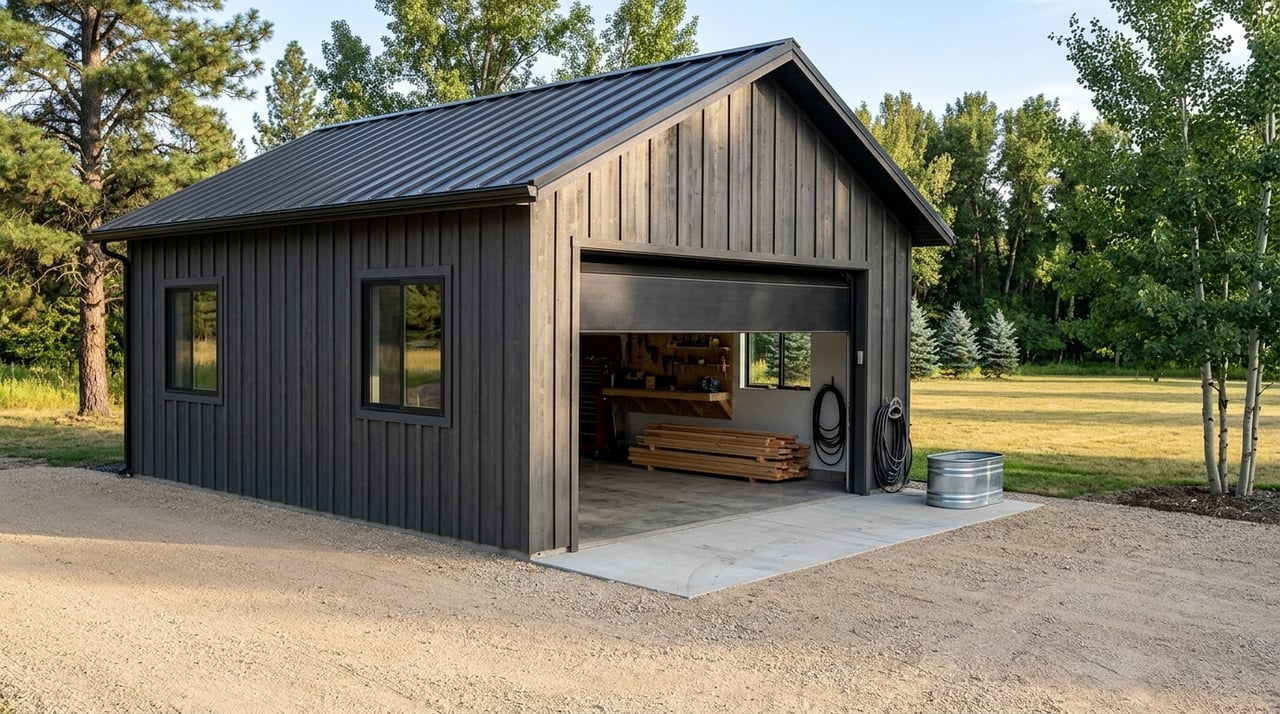
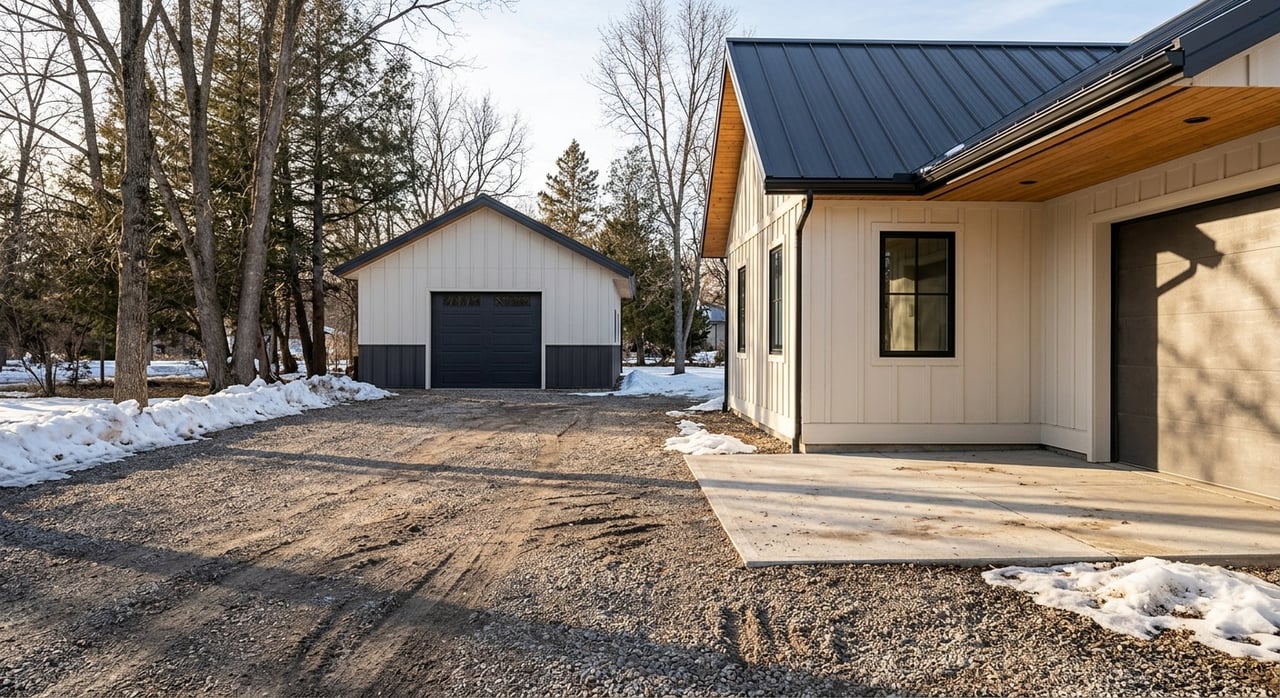
In Gallatin Gateway, it is common to come across detached garages, shops, sheds, barns, and similar structures. That can be a big plus if you want storage, hobby space, or room for equipment.
Still, you should not assume an outbuilding is allowed or fully compliant just because it is already there. Gallatin County’s zoning guidance says setbacks, building height, density, floor area, and permitted accessory structures should be checked parcel by parcel.
Highway 191 can shape your daily life
Highway 191 is one of the most important factors to think through before you buy in Gallatin Gateway. The community plan describes it as a major transportation route that bisects the area, serves as its gateway, and carries high-speed traffic headed toward Big Sky.
That means location is not just about distance on a map. Driveway placement, turning movements, and the history of legal access can all affect convenience, safety, and future property plans.
Access is not always straightforward
The community plan notes that access points from adjacent properties are limited along the corridor. It also encourages frontage roads, deep lots, landscaped buffers, and safer connections for vehicles, pedestrians, and cyclists.
If a property fronts Highway 191, access may be more tightly managed than you expect. That is especially important if you are considering future improvements, a new driveway configuration, or changes to how the site is used.
Transit is available, but limited
As of July 2026, Skyline’s summer schedule runs seven days a week and includes a Gallatin Gateway Inn stop on the Bozeman to Big Sky Link. That gives some buyers a useful regional option for commuting or connecting to nearby destinations.
At the same time, Skyline notes that construction, road improvements, weather, and accidents can delay or reroute service. So while transit is a real option, Gallatin Gateway still operates as a schedule-sensitive corridor location rather than a place with broad local transit coverage.
Utilities deserve close review
Utilities are one of the biggest due diligence items in Gallatin Gateway, especially if you are comparing in-town lots with rural properties. Service can vary from one parcel to the next, so it is important to verify what actually serves the property.
Public systems versus private systems
The local water-quality district says public water and sewer systems are more protective of water quality and encourages their use where municipal services are otherwise unavailable. It also states that most homes outside service areas rely on private wells.
If a property is within a water and sewer district, the owner must connect to that system. The Gallatin Gateway Water & Sewer District describes itself as a local government unit with limited powers related to wastewater treatment and disposal, which is why you should confirm exactly what district service reaches the parcel.
Septic requirements matter
Gallatin County health officials state that a local wastewater treatment system permit is always required before any non-public or public system is installed. For on-site systems, the county requires a permit application, a signed property information request, and a scaled site plan.
Site evaluations must be performed by a county-registered evaluator or a Montana professional engineer. If you are buying a home on septic, it is smart to verify the permit history and available records early in the process.
Floodplain and setback issues can affect use
If you are drawn to land near the river or other water features, this is one of the first areas to investigate. Gallatin County says its current floodplain boundaries are based on FEMA flood studies effective April 21, 2021.
The county’s subdivision regulations also require watercourse setbacks measured from the ordinary high-water mark. The setback is 300 feet for the East Gallatin, West Gallatin, Gallatin, Madison, Jefferson, and Missouri watercourses, and 150 feet for other watercourses.
For buyers, those are not small technical details. They can directly affect where additions, accessory buildings, driveways, or future improvements may be possible.
Permits can involve multiple offices
One of the easiest mistakes a buyer can make is assuming one permit office handles everything. In Gallatin Gateway, approvals can involve county, district, state, or transportation agencies depending on the property.
Gallatin County states that land use permits are required in all zoning districts. The county also says it does not issue building permits outside Bozeman and Belgrade, which means some project questions may need to go to the state building department instead.
Road access approvals
If work will affect a county-road approach, Gallatin County’s road and bridge office requires a signed access permit before work can begin. That applies to practical items that can shape day-to-day use, including how you enter the property.
If the property fronts Highway 191, access questions may involve the Montana Department of Transportation as well. For buyers considering new construction, major changes, or land with future plans, this can be a critical point to review before closing.
A smart buyer checklist for Gallatin Gateway
Gallatin Gateway can be a great fit, but it rewards buyers who ask detailed questions early. A careful review helps you avoid surprises and better understand the true potential of a property.
Ask about the parcel itself
- Which zoning district and sub-district apply, and what does that mean for setbacks, density, and accessory buildings?
- Is the parcel in the town core, the Highway 191 corridor, or the rural planning area?
- Is the parcel zoned or unzoned, and if unzoned, which subdivision process applies?
- Are there recorded covenants or HOA rules affecting shops, barns, RVs, fences, or future additions?
- If the property includes larger acreage, are ditch shares, irrigation conveyance, or water rights included?
Ask about utilities and site systems
- Is the home connected to a public district, or does it rely on a private well and septic system?
- Is there a current septic permit, approved site evaluation, or record of wastewater installation?
- Is there documentation of a usable well, and are there any local groundwater conditions that could affect drilling rules?
Ask about access and improvements
- Does the driveway, gate, bridge, or culvert appear to provide practical year-round access?
- Are there signs that floodplain, drainage, or riparian conditions are affecting the site or structure?
- If there are shops, barns, or other outbuildings, are they permitted and compatible with the parcel’s zoning and setbacks?
Why local guidance matters here
In Gallatin Gateway, two properties with similar price points can come with very different realities behind the scenes. One may offer straightforward in-town living, while another may involve private systems, floodplain questions, managed highway access, or limitations tied to zoning and setbacks.
That is where local knowledge and construction-minded review can make a real difference. When you understand how the parcel works, not just how the home looks, you can move forward with more confidence.
If you are considering a home, land, or acreage property in Gallatin Gateway, working with a local advisor who understands the broader Gallatin Valley can help you ask better questions from the start. To talk through your goals and next steps, schedule a free consultation with Carissa Maus (Paulson).
FAQs
What makes Gallatin Gateway different from other Gallatin Valley locations?
- Gallatin Gateway functions as a corridor community connected to Highway 191, Bozeman, and Big Sky, so property use, access, utilities, and commute patterns can vary more than buyers expect.
What should you verify before buying acreage in Gallatin Gateway?
- You should verify zoning, subdivision status, access, floodplain or watercourse setbacks, utility service, septic records, and whether any outbuildings or improvements comply with current requirements.
What utility setup is common for Gallatin Gateway properties?
- Some properties may connect to district water and sewer service, but many homes outside service areas use private wells, and on-site wastewater systems require county permitting.
Why is Highway 191 important when buying in Gallatin Gateway?
- Highway 191 is the area’s main transportation route, and frontage, driveway access, turning movements, and transportation approvals can all affect how a property functions.
What should you ask about shops, barns, and other outbuildings in Gallatin Gateway?
- You should ask whether the structures are permitted and whether they meet the parcel’s rules for setbacks, height, density, floor area, and accessory building use.