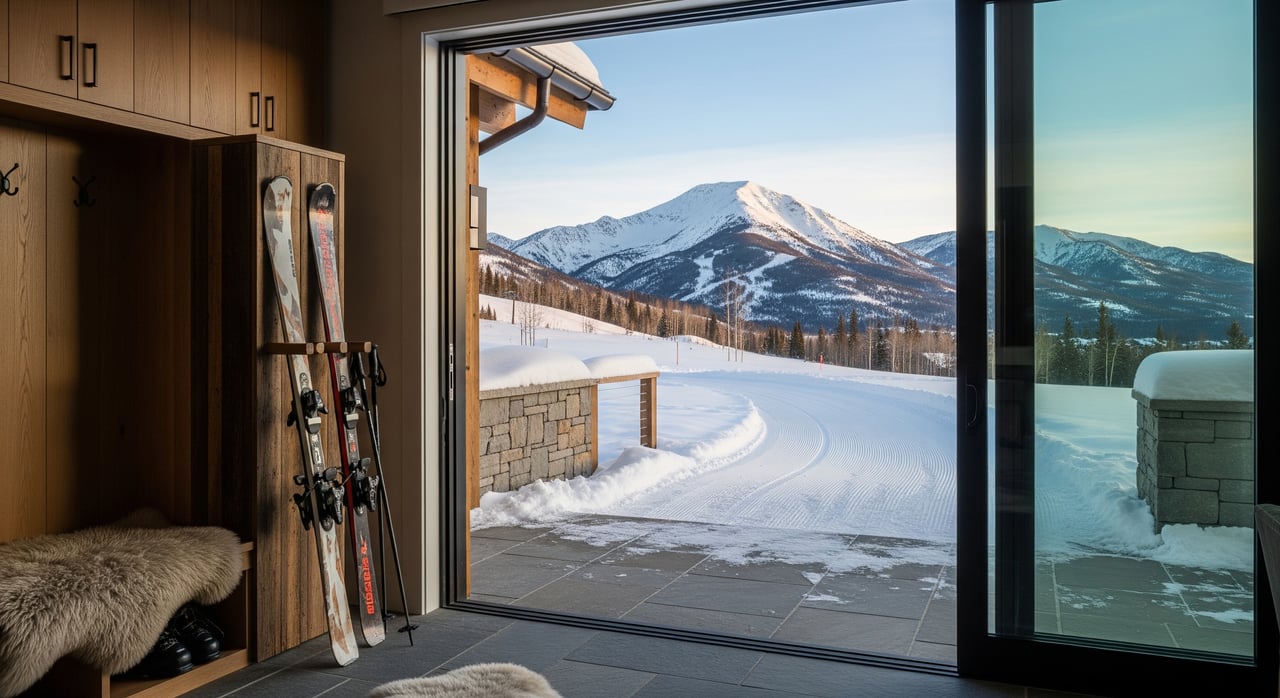
Is every “ski-in/ski-out” home in Big Sky truly skiable from the door? Not always. If you have browsed listings, you have seen the term used in many ways, which can make decisions harder than they should be. You deserve clear, practical guidance so you can picture your daily routine and protect your investment. In this guide, you will learn what the label really covers in Big Sky, how to verify a property’s access, and how those details affect value, safety, and resale. Let’s dive in.
What ski-in/ski-out means in Big Sky
“Ski-in/ski-out” is marketing language, not a legal standard. In Big Sky, it lives on a spectrum of access types that feel very different day to day.
- True on-piste, lift-served. Step outside, click in, and slide onto a groomed trail or directly to a lift or tram. Highest convenience and typically the strongest premium.
- Short walk or boot pack. A few minutes in ski boots across a path, driveway, or connector to reach the trail or lift. Practical for many, but not the same as door-to-trail.
- Shuttle or road access labeled loosely. Some listings still use the term when the real access is a quick shuttle or drive to a base lift. Useful, but not true ski-in/ski-out.
- Private ski easement. Access runs on a recorded trail or HOA path, sometimes across private land. Rules, hours, and maintenance can be different from resort trails.
- Proximity marketing. Very close to a lift or base area, often within a few hundred yards, but not skiable from the door.
Understanding where a property fits on this spectrum helps you judge convenience, winter safety, upkeep, and resale.
Big Sky’s layout and seasonal realities
Big Sky Resort spans multiple base areas, high-alpine lifts, and residential pockets. Lift connections, grooming routes, and neighborhood access can vary by sector and by season. What feels like seamless access one winter can change the next if the resort reroutes a connector, adjusts grooming, or if early-season coverage is thin.
Shuttle frequency and plowed walkways also shape your daily experience. When a listing relies on a resort shuttle, confirm schedules and whether service changes in shoulder seasons.
Why the differences matter
- Daily convenience. Door-to-trail access saves time and energy, especially with kids or guests. A short boot pack might be easy for adults but less fun with gear.
- Safety and terrain. Some homes sit near steeper or open slopes that can involve avalanche mitigation. Know where the access runs and who manages it.
- Maintenance and HOA duties. Private trails and gates require grooming, plowing, and upkeep. Fees often reflect this work.
- Resale and liquidity. Buyers pay a premium for genuine access, and those properties often move faster in season. The exact premium depends on how direct the access is, the home’s condition, and supply.
How to verify a listing’s claim
Because there is no universal definition, do not rely on ad copy alone. Use a step-by-step approach that separates fact from marketing.
Title, plats, and easements
- Ask for the recorded plat and a current title report.
- Look for ski trail easements, right-of-way, and pedestrian access. A recorded easement can secure ongoing use. Absence may mean access is by permission only.
- Confirm who maintains the trail and at whose cost in easement language or agreements.
HOA and resort agreements
- Request CC&Rs, recent HOA minutes, and any resort license or reciprocal access agreements.
- Review rules for rentals, on-site grooming, gates, and private trail use. Fees may include slope and shuttle upkeep.
Safety, insurance, and lending
- Ask about any known avalanche hazard zones and who handles mitigation.
- Check with insurers early about property and liability coverage for on-slope or limited winter access.
- Confirm lender comfort with the location and access type.
Walk the route in winter
- If possible, test the access in ski boots during winter. Time the door-to-lift trip and the ski-in return.
- Request recent winter video from the seller or broker if you cannot visit when snow is down.
Consult authoritative local resources
- Review official resort trail maps, lift operations, and grooming notices for the relevant sector.
- Check community resources for transportation services and shuttle updates.
- Consult regional avalanche forecasting sources for hazard information and historical context.
Buyer checklist: questions to ask
- What exact access exists: door-to-trail, short boot pack, private connector, or shuttle reliance?
- Is there a recorded ski easement or right-of-way, and who maintains it?
- What do CC&Rs say about grooming, gates, and trail hours?
- How long does it actually take to reach a lift and return in ski boots?
- What is the grooming and closure history for the nearest connector trails?
- Are there avalanche mitigation responsibilities or assessments?
- Do insurance and lending terms change due to location or access?
- How do HOA fees compare to similar properties with the same level of access?
Seller tips: market clearly and reduce risk
- Use precise language to describe access and distance in minutes, not just labels.
- Provide recorded documents: plats, easements, and CC&Rs that reference access.
- Share maps, recent winter photos or video, and a simple door-to-lift route description.
- Disclose resort or HOA agreements, any special assessments, and seasonal limits on access.
- Offer shuttle details, parking rules, and storage solutions that improve guest experience.
Costs, premiums, and rentals in Big Sky
“Ski-in/ski-out” properties in resort towns typically command a premium, but the amount varies. Door-to-trail access often sits at the high end. Short-walk or shuttle-dependent homes may trade for less, even within the same neighborhood. Short-term rental potential can be strong near lifts, but HOA and resort rules shape earnings and occupancy. Always compare recent sold comps with the same true level of access, not just the label.
Practical logistics that shape daily life
- Parking and storage. Garage space, gear lockers, and guest parking can be as valuable as a few steps shaved off a route.
- Stairs and walkways. Carrying skis up stairs or across icy segments changes what “easy” feels like in February.
- Off-season usability. Homes near trailheads, Town Center amenities, or bike paths can attract year-round demand, not just winter visits.
Make a confident move with a local guide
If “ski-in/ski-out” is on your wish list, you deserve clarity. With local roots and construction-savvy guidance, you can separate marketing from reality, verify the details, and buy or sell with confidence in Big Sky. Ready to walk the route, review documents, and price correctly for today’s market? Connect with Carissa Maus (Paulson) to schedule a free consultation.
FAQs
Is “ski-in/ski-out” a legal term in Big Sky?
- No. It is marketing language. Always verify recorded easements, HOA documents, and physically test winter access.
How much extra will I pay for ski-in/ski-out in Big Sky?
- There is a premium, but it varies by exact access level, property condition, and supply. Use recent sold comps with the same access type for accurate guidance.
Can ski access change after I buy?
- Yes. Trail routing, grooming, and resort operations can change season to season. Recorded easements and agreements provide the strongest long-term certainty.
Who maintains a ski trail that crosses my property or HOA?
- Maintenance may fall to the HOA, the resort, or another party. Check CC&Rs and easement language to confirm responsibility and cost.
Should I worry about avalanche exposure near on-slope homes?
- It depends on location and mitigation. Verify known hazard zones, understand who manages mitigation, and consult insurers and local forecasting resources.